
ASSOCIATION OF INTERLEUKIN-6, INTERLEUKIN-4, AND TUMOR NECROSIS FACTOR-ALPHA GENE POLYMORPHISMS WITH SERUM CYTOKINE PROFILES IN BETA-THALASSEMIA MAJOR PATIENTS

Article Sidebar
-
Thalassemia, Interleukin-6, Interleukin-4, Tumor necrosis factor-alpha, Single nucleotide polymorphism
Abstract
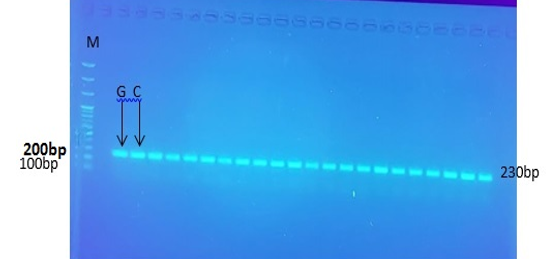
Beta Thalassemia is an inherited condition results from mutation in β globin gene which leads to several complication including, severe anemia and iron overload among others, in which the signs appear in early childhood. This study investigated the possible role of cytokine gene polymorphism on thalassemia patients. Our research involved 72 patients diagnosed with beta thalassemia major and a control group of 40 cases. Both groups' ages ranged from 1 to 30 years. Serum cytokines IL-6, IL-4, and TNF-α level were measured using enzyme linked immunosorbent assay (ELISA) as well as analyzing the genetic profile for the same genes. Blood samples were subjected to DNA isolation and molecular detection for gene polymorphism (interleukin 6 polymorphism at position 174, interleukin 4 polymorphisms at position 589, and tumor necrosis factor alpha polymorphism at position 308) using ARMS-PCR. Results showed significant increase in IL-6 and TNF-α (p<0.05), whereas the difference in IL-4 was not significant. High-producing genotypes (GG for IL-6, and GG for TNF-α) showed the highest serum cytokine levels, while low-producing genotypes (CC, and AA respectively) showed the lowest. Serum IL-6 levels were significantly higher in patients across all IL-6 genotypes (GG, GC, CC) compared to their respective genotype-matched healthy controls. IL-4 decreased in CC and slightly increased in CT (not significantly). TNF-α levels significantly increased in GG and GA, but not in AA. For the IL-6 (-174G>C) polymorphism, the odds ratio for the GC genotype was 0.66 (95% CI: 0.27–1.61), whereas the odds ratio for the CC genotype was 1.42 (95% CI: 0.22–15.52). The CC, CT, and TT genotypes displayed varying frequencies among groups in the IL-4 gene polymorphism. In relation to the TNF-α gene polymorphism, the AA genotype displayed an odds ratio of 1.7 (95% CI: 0.13–91.27), while the large confidence interval suggests poor statistical precision, whereas the GG genotype was not substantially linked to thalassemia.
Full text article
References
Abbas, N. A., & Zaman, N. A. (2019). Serological Study of Human Cytomegalovirus in Thalassemia Patients and Blood Donors and its Relation to IL-6 in Kirkuk City. Rafidain Journal of Science, 28(1), 23-28. DOI:10.33899/rjs.2019.159397
Abd, D. A.-A., Lafta, F. M., & Alwan, Y. F. (2022). The association between plasma IL-6 levels and several thalassemia-related clinical features in Iraqi patients. International journal of health sciences, 6(S6), 548-561. https://doi.org/10.53730/ijhs.v6nS6.10343
Abdulla, A. A. (2018). Evaluation of serum antioxidant enzymes in β-thalassemia major patients. International Journal of ChemTech Research, 11(7), 323-328. http://dx.doi.org/10.20902/IJCTR.2018.110738
Aggeli, C., Antoniades, C., Cosma, C., Chrysohoou, C., Tousoulis, D., Ladis, V.,…Stefanadis, C. (2005). Endothelial dysfunction and inflammatory process in transfusion-dependent patients with beta-thalassemia major. International journal of cardiology, 105(1), 80-84. https://doi.org/10.1016/j.ijcard.2004.12.025
Al-Ahmad, M., Ali, A., & Haider, M. Z. (2023). Interleukin-4 (C590T) Gene Polymorphism in Association with Asthma Severity. Journal of Asthma and Allergy, 1269-1278. https://doi.org/10.2147/JAA.S429981
Ali, G. S., Jubrial, A. M. S., Najeeb, M. K., & Al hussein, H. Y. I. (2018). Comparative Study of the Endocrine Disorders of Βeta-Thalassemia Major Patients and Control Group in Duhok Province. Science Journal of University of Zakho, 6(4), 135-139. https:/e/doi.org/10.25271/sjuoz.2018.6.4.539
Alsadawi, A. A., Duabel, J., & Alnaji, H. A. (2019). Hepatitis C and il-6 with 174G/C Gene Polymorphism in β-Thalassemia. Int J of Drug Delivery Technol, 9, 617-622. DOI: 10.25258/ijddt.9.4.17.
Bagheri, M., Amirzargar, A. A., Ghavamzadeh, A., Alimoghadam, K., Khosravi, F., Ansaripour, B., Moradi, B., & Nikbin, B. (2005). Cytokine gene polymorphisms in iranian patients with beta-thalassemia major. Iranian Journal of Immunology, 2(1), 43-49.
Bazi, A., Mirimoghaddam, E., Rostami, D., & Dabirzadeh, M. (2016). Characteristics of seropositive hepatitis B and C thalassemia major patients in South-East of Iran. Biotechnology and Health Sciences, 3(2). DOI:10.17795/bhs-35687
Du, Y., Gao, L., Zhang, K., & Wang, J. (2015). Association of the IL6 polymorphism rs1800796 with cancer risk: a meta-analysis. Genet Mol Res, 14(4), 13236-13246. DOI: 10.4238/2015.October.26.20
Duan, R., Wang, N., Shang, Y., Li, H., Liu, Q., Li, L., & Zhao, X. (2022). TNF-α (G-308A) polymorphism, circulating levels of TNF-α and IGF-1: risk factors for ischemic stroke—an updated meta-analysis. Frontiers in Aging Neuroscience, 14, 831910. doi: 10.3389/fnagi.2022.831910
El-Rasheidy, F. H., Essa, E. S., Mahmoud, A. A., & Nada, A. E.-w. A. (2016). Elevated serum adiponectin is related to elevated serum ferritin and interleukin-6 in β-thalassaemia major children. Journal of Pediatric Endocrinology and Metabolism, 29(8), 953-958. DOI:10.1515/jpem-2016-0014
Elsayh, K. I., Mohammed, W. S., Zahran, A. M., & Saad, K. (2016). Leukocytes apoptosis and adipocytokines in children with beta thalassemia major. Clinical and experimental medicine, 16, 345-350. doi.org/10.1007/s10238-015-0361-6
Galanello, R., & Origa, R. (2010). Beta-thalassemia. Orphanet journal of rare diseases, 5, 1-15. DOI: 10.1186/1750-1172-5-11
Garadah, T. S., Jaradat, A. A., AlAlawi, M. E., Hassan, A. B., & Sequeira, R. P. (2016). Pain frequency, severity and QT dispersion in adult patients with sickle cell anemia: correlation with inflammatory markers. Journal of blood medicine, 255-261. DOI:10.2147/JBM.S114585
Gombar, S., Parihar, K., Choudhary, M., Gombar, S., & Feb, S. (2018). Comparative study of serum ferritin and vitamin D in thalassemia patients with healthy controls. Int J Res Med Sci, 6(2), 693-695. doi.org/10.18203/2320-6012.ijrms20180322
Hassan, A., & Rahman, S. (2022). Evaluation of liver enzymes, interleukin-6 and tumer necrosis factor-alpha in children suffering from thalassemia and treated with Deferoxamine and Deferasirox drug in Kirkuk city. HIV Nursing, 22(2), 1461-1465. doi.org/10.31838/hiv22.02.279
Hemperly, A., & Vande Casteele, N. (2018). Clinical pharmacokinetics and pharmacodynamics of infliximab in the treatment of inflammatory bowel disease. Clinical Pharmacokinetics, 57, 929-942. doi.org/10.1007/s40262-017-0627-0
Kattamis, A., Forni, G. L., Aydinok, Y., & Viprakasit, V. (2020). Changing patterns in the epidemiology of β‐thalassemia. European Journal of Haematology, 105(6), 692-703. DOI: 10.1111/ejh.13512
Kim, S.-D., Park, J.-M., Kim, I.-S., Choi, K.-D., Lee, B.-C., Lee, S.-H., & Hong, M.-S. (2004). Association of IL-1β, IL-1ra, and TNF-α gene polymorphisms in childhood nephrotic syndrome. Pediatric Nephrology, 19, 295-299. DOI: 10.1007/s00467-003-1403-y
Kohgo, Y., Ikuta, K., Ohtake, T., Torimoto, Y., & Kato, J. (2008). Body iron metabolism and pathophysiology of iron overload. International journal of hematology, 88, 7-15. DOI:10.1007/s12185-008-0120-5
Legrand, D., Adriaensen, W., Vaes, B., Matheï, C., Wallemacq, P., & Degryse, J. (2013). The relationship between grip strength and muscle mass (MM), inflammatory biomarkers and physical performance in community-dwelling very old persons. Archives of gerontology and geriatrics, 57(3), 345-351. doi: 10.1016/j.archger.2013.06.003.
Luaibi, H. A., & Mohammed, B. J. (2023). Does TNF-α 308 G/A (rs1800629) gene polymorphism associate with liver and pancreas disorders in Iraqi adults with beta thalassemia major? Human Antibodies, 31(4), 99-105. DOI: 10.3233/HAB-240022
Malallah, H. A., Al-Shemmary, A. J., AlMmuhammady, M. H., Jaber, A. H., & Al-Mashhadi, A. R. (2023). SNP in Tumor Necrosis Factor-Alpha (− 308 A/G) Gene Association with HCV Infected Thalassemia Patients. The Egyptian Journal of Hospital Medicine, 90(2), 2296-2302. DOI: 10.21608/EJHM.2023.285691
Mishra, A. K., & Tiwari, A. (2013). Iron overload in Beta thalassaemia major and intermedia patients. Maedica, 8(4), 328. PMCID: PMC3968466
Mohammed, A. J., & Yenzeel, J. H. (2024). Assessment of Interleukin 1-β, Interleukins-6 and Some Biochemical Parameters in a Sample of Iraqi Patients with β–Thalassemia Major. Ibn AL-Haitham Journal For Pure and Applied Sciences, 37(4), 35-44. DOI:10.30526/37.4.3457
Mohammed, B. J. (2022). TNF-alpha gene polymorphism and its relation to vitamin D, calcium, alkaline phosphatase and ferritin status in Iraqi beta thalassemia patients. doi: 10.51248/.v42i5.1848
Naji, B. A. A. (2024). The Association Between Cytokines (IFN-Γ and IL-4) Gene Polymorphisms and Clinical Manifestations of Β-Thalassemia in Iraqi Patients. NATURALISTA CAMPANO, 28(1), 1573-1578. ISSN:1827-7160
Ratha, R., & Altaei, T. (2013). Therapeutic Drug Monitoring of Chelating Agent Deferoxamine for β-Thalassemia Major Patients. International Journal of Clinical Medicine, 4(08), 331-342. DOI: 10.4236/ijcm.2013.48059
Ricerca, B. M., Di Girolamo, A., & Rund, D. (2009). Infections in thalassemia and hemoglobinopathies: focus on therapy-related complications. Mediterranean journal of hematology and infectious diseases, 1(1). DOI: 10.4084/MJHID.2009.028
Saeed, K. N., Shnawa, B. H., & Al-Badran, A. I. (2024). Polymorphisms In The Ace2 And Il-6 Genes And Their Potential Impact On The Susceptibility Of Severe Covid-19 Among Erbil Hospitalized Patients: Polymorphisms in the ACE2 and IL-6 genes and COVID-19. Science Journal of University of Zakho, 12(2), 221-226. https://doi.org/10.25271/sjuoz.2024.12.2.1282
Sari, T. T., Gatot, D., Akib, A. A., Bardosono, S., Hadinegoro, S. R., Harahap, A. R., & Idjradinata, P. S. (2016). Immune response of thalassemia major patients in Indonesia with and without splenectomy. Acta Medica Indonesiana, 46(3). PMID: 25348184
Shnawa, B. H., & Taha, A. M. (2023). Thyroid Autoantibodies in Type -1 Diabetic Mellitus Patients and their Correlation with Thyroid function and Tumor Necrotic Factor-Alpha. Science Journal of University of Zakho, 11(1), 98-103. https://doi.org/10.25271/sjuoz.2023.11.1.1013
Surchi, O., & Ali, S. (2018). Biochemical Status of Beta-Thalassemia Major Patients in Erbil City: Case Control Study. Erbil Dental Journal (EDJ), 1(1), 1-9. DOI: https://doi.org/10.15218/edj.2018.01
Tanaka, T., & Kishimoto, T. (2014). The biology and medical implications of interleukin-6. Cancer immunology research, 2(4), 288-294. DOI: 10.1158/2326-6066.CIR-14-0022
Vicari, P., Adegoke, S. A., Mazzotti, D. R., Cançado, R. D., Nogutti, M. A. E., & Figueiredo, M. S. (2015). Interleukin-1β and interleukin-6 gene polymorphisms are associated with manifestations of sickle cell anemia. Blood cells, molecules & diseases, 54(3), 244-249. https://doi.org/10.1016/j.bcmd.2014.12.004
Woo, P., & Humphries, S. E. (2013). IL-6 polymorphisms: a useful genetic tool for inflammation research? The Journal of clinical investigation, 123(4), 1413-1414. doi.org/10.1172/jci67221
Zhang, D., Li, J., Jiang, Z. W., Yu, B., & Tang, X. (2003). Association of two polymorphisms of tumor necrosis factor gene with acute severe pancreatitis. Journal of Surgical Research, 112(2), 138-143. doi: 10.3748/wjg.v9.i4.824
Zhuang, L., Ma, W., Cai, D., Zhong, H., & Sun, Q. (2013). Associations between tumor necrosis factor-α polymorphisms and risk of psoriasis: a meta-analysis. PLoS One, 8(12), e68827. DOI: 10.1371/journal.pone.0068827
Authors
Copyright (c) 2026 Karzan Fadhil Mohamad and Sarhang Hasan Azeez

This work is licensed under a Creative Commons Attribution-NonCommercial-ShareAlike 4.0 International License.
Authors who publish with this journal agree to the following terms:
- Authors retain copyright and grant the journal right of first publication with the work simultaneously licensed under a Creative Commons Attribution License [CC BY-NC-SA 4.0] that allows others to share the work with an acknowledgment of the work's authorship and initial publication in this journal.
- Authors are able to enter into separate, additional contractual arrangements for the non-exclusive distribution of the journal's published version of the work, with an acknowledgment of its initial publication in this journal.
- Authors are permitted and encouraged to post their work online.