
ECOLOGICAL EFFECTS AND ENVIRONMENTAL FATE OF SILVER NANOPARTICLES IN SOIL AND IN THE WATER ECOSYSTEM: A REVIEW

Article Sidebar
-
Silver nanoparticles, Environmental fate, Ecotoxicology, Aquatic ecosystems, Soil ecosystems
Abstract
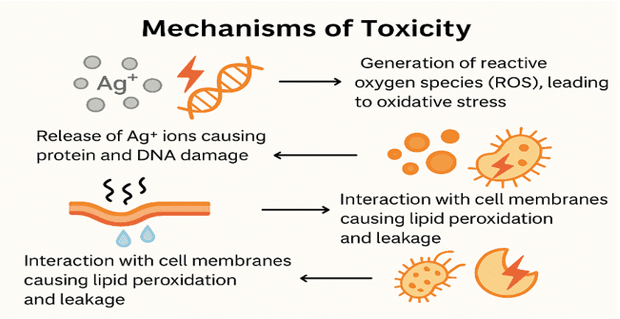
Silver nanoparticles, which are appreciated due to their increased antibacterial, catalytic and conductive functions, are commonly employed in medical kits, cloths, cosmetics, and water filters, but their release through wastewater, biosolids, and runoff is highly dangerous as there is no regulation of their emission and transformation, such as sulfidation, aggregation, and dissolution. In soil ecosystems, AgNPs react with pH, redox conditions, organic matter, and clay, and sulfidation to Ag2S causes short-term bioavailability to decrease but increases persistence; they disrupt microbial communities, inhibit nitrogen-fixing bacteria (e.g., Rhizobium), mycorrhizal fungi, and enzyme activities, decrease soil fertility, nutrient cycling, and plant-microbe symbiosis and cause oxidative stress in earthworms. Aquatic systems facilitate AgNP disaggregation, sedimentation, and ion release driven by organic matter and ions and cause toxicity at all trophic levels: algae experience the inhibition of photosynthesis and ROS damage, zooplankton feeding problems, and fish experience bioaccumulation, neurotoxicity and reproductive problems. Ag+ ion release leading to protein/DNA damage, Oxidative stress due to ROS, membrane peroxidation, quorum sensing disruption and systemic changes in stress, detoxification and metabolism pathways confirmed by omics is a subset of the toxicity mechanisms. Though the water body information is plentiful, soil research is still very limited; gaps still exist in long-term low dose field effects and co-contamination. The research in the future recommends mesocosm/field testing, model dynamic transformation, and the safer design of nanoparticles to guide the risk analysis and sustainable management
Full text article
References
Abdelkader, Y., Perez-Davalos, L., LeDuc, R., Zahedi, R. P., & Labouta, H. I. (2023). Omics approaches for the assessment of biological responses to nanoparticles. Adv Drug Deliv Rev, 200, 114992. https://doi.org/10.1016/j.addr.2023.11499210.1016/j.addr.2023.114992
Al Sulivany, B. S. A., Omar, I. . ., Yousif , A., & Owais, M. . (2025). Effects of Dietary Green Microalgae (Chlorella vulgaris) and Iron Nanoparticles on Biochemical, Enzymatic, and Tissue Health in Cyprinus carpio. Journal of Aquaculture Science, 10(2), 98–108. https://doi.org/10.20473/joas.v10i2.74314
Akhter, M. S., Rahman, M. A., Ripon, R. K., Mubarak, M., Akter, M., Mahbub, S., Al Mamun, F., & Sikder, M. T. (2024). A systematic review on green synthesis of silver nanoparticles using plants extract and their bio-medical applications. Heliyon, 10(11). https://doi.org/10.1049/nbt2.12078 10.1049/nbt2.12078
Anh, N. H., Min, Y. J., Thi My Nhung, T., Long, N. P., Han, S., Kim, S. J., Jung, C. W., Yoon, Y. C., Kang, Y. P., Park, S. K., & Kwon, S. W. (2023). Unveiling potentially convergent key events related to adverse outcome pathways induced by silver nanoparticles via cross-species omics-scale analysis. J Hazard Mater, 459, 132208. https://doi.org/10.1016/j.jhazmat.2023.132208
Aragoneses-Cazorla, G., Buendia-Nacarino, M. P., Mena, M. L., & Luque-Garcia, J. L. (2022). A Multi-Omics Approach to Evaluate the Toxicity Mechanisms Associated with Silver Nanoparticles Exposure. Nanomaterials (Basel), 12(10), 1762. https://doi.org/10.3390/nano12101762 10.3390/nano12101762
Arienzo, M., & Ferrara, L. (2022). Environmental fate of metal nanoparticles in estuarine environments. Water, 14(8), 1297.https://doi.org/10.3390/w14081297
Asad, F., Nadeem, A., Naseer, S., Ashraf, A., Sulivany, B., & Jamal, R. (2025). Toxic and synergistic effects of micro-nanoplastics with radioactive contaminants on aquaculture: Their occurrence, distribution, role as vectors, detection and removal strategies. International Aquatic Research, 17(2), 95-116. doi: 10.22034/iar.2025.2008924.1739
Aslam, H., Umar, A., Nusrat, N., Mansour, M., Ullah, A., Honey, S., Sohail, M. J., Abbas, M., Aslam, M. W., & Khan, M. U. (2024). Nanomaterials in the treatment of degenerative intellectual and developmental disabilities. Exploration of BioMat-X, 1(6), 353-365. https://doi.org/10.37349/ebmx.2024.00024
Awadelkareem, A. M., Siddiqui, A. J., Noumi, E., Ashraf, S. A., Hadi, S., Snoussi, M., Badraoui, R., Bardakci, F., Ashraf, M. S., Danciu, C., Patel, M., & Adnan, M. (2023). Biosynthesized Silver Nanoparticles Derived from Probiotic Lactobacillus rhamnosus (AgNPs-LR) Targeting Biofilm Formation and Quorum Sensing-Mediated Virulence Factors. Antibiotics (Basel), 12(6), 986. https://doi.org/10.3390/antibiotics12060986
Buffet, P. E., Zalouk-Vergnoux, A., Chatel, A., Berthet, B., Metais, I., Perrein-Ettajani, H., Poirier, L., Luna-Acosta, A., Thomas-Guyon, H., Risso-de Faverney, C., Guibbolini, M., Gilliland, D., Valsami-Jones, E., & Mouneyrac, C. (2014). A marine mesocosm study on the environmental fate of silver nanoparticles and toxicity effects on two endobenthic species: the ragworm Hediste diversicolor and the bivalve mollusc Scrobicularia plana. Sci Total Environ, 470-471, 1151-1159. https://doi.org/10.1016/j.scitotenv.2013.10.114
Cao, J., Feng, Y., He, S., & Lin, X. (2017). Silver nanoparticles deteriorate the mutual interaction between maize (Zea mays L.) and arbuscular mycorrhizal fungi: a soil microcosm study. Applied Soil Ecology, 119, 307-316. https://doi.org/10.1016/j.apsoil.2017.04.011
Chaachouay, N., Zidane, L., & Husen, A. (2024). Impact of Silver Nanoparticles in Aquatic Plants. In Plant Response to Silver Nanoparticles: Plant Growth, Development, Production, and Protection (pp. 249-263). Springer. https://doi.org/10.1007/978-981-97-7352-7_14
Courtois, P. (2020). Ecotoxicological assessment of silver nanoparticles and their derivatives: their effects on fauna, flora and soil microorganisms Université de Lille].
Dang, F., Huang, Y., Wang, Y., Zhou, D., & Xing, B. (2021). Transfer and toxicity of silver nanoparticles in the food chain. Environmental Science: Nano, 8(6), 1519-1535. https://doi.org/10.1039/D0EN01190H10.1039/D0EN01190H
De Matteis, V., Malvindi, M. A., Galeone, A., Brunetti, V., De Luca, E., Kote, S., Kshirsagar, P., Sabella, S., Bardi, G., & Pompa, P. P. (2015). Negligible particle-specific toxicity mechanism of silver nanoparticles: the role of Ag+ ion release in the cytosol. Nanomedicine, 11(3), 731-739. https://doi.org/10.1016/j.nano.2014.11.00210.1016/j.nano.2014.11.002
de Oca-Vásquez, G. M., Solano-Campos, F., Vega-Baudrit, J. R., López-Mondéjar, R., Odriozola, I., Vera, A., Moreno, J. L., & Bastida, F. (2020). Environmentally relevant concentrations of silver nanoparticles diminish soil microbial biomass but do not alter enzyme activities or microbial diversity. Journal of Hazardous Materials, 391, 122224. https://doi.org/10.1016/j.jhazmat.2020.122224
Dodds, W. K., Guinnip, J. P., Schechner, A. E., Pfaff, P. J., & Smith, E. B. (2021). Fate and toxicity of engineered nanomaterials in the environment: A meta-analysis. Science of the Total Environment, 796, 148843. https://doi.org/10.1016/j.scitotenv.2021.148843
Du, J., Tang, J., Xu, S., Ge, J., Dong, Y., Li, H., & Jin, M. (2018). A review on silver nanoparticles-induced ecotoxicity and the underlying toxicity mechanisms. Regulatory Toxicology and Pharmacology, 98, 231-239. https://doi.org/10.1016/j.yrtph.2018.08.003
Eivazi, F., & Afrasiabi, Z. (2018). Effects of silver nanoparticles on the activities of soil enzymes involved in carbon and nutrient cycling. Pedosphere, 28(2), 209-214. https://doi.org/10.1016/S1002-0160(18)60019-0
Ellis, L. A., Valsami-Jones, E., Lead, J. R., & Baalousha, M. (2016). Impact of surface coating and environmental conditions on the fate and transport of silver nanoparticles in the aquatic environment. Sci Total Environ, 568, 95-106. https://doi.org/10.1016/j.scitotenv.2016.05.199
Flores-Lopez, L. Z., Espinoza-Gomez, H., & Somanathan, R. (2019). Silver nanoparticles: Electron transfer, reactive oxygen species, oxidative stress, beneficial and toxicological effects. Mini review. J Appl Toxicol, 39(1), 16-26. https://doi.org/10.1002/jat.3654 10.1002/jat.3654
Furtado, L. M., Norman, B. C., Xenopoulos, M. A., Frost, P. C., Metcalfe, C. D., & Hintelmann, H. (2015). Environmental Fate of Silver Nanoparticles in Boreal Lake Ecosystems. Environ Sci Technol, 49(14), 8441-8450.https://doi.org/10.1021/acs.est.5b01116
Gavin, A. (2016). Investigating the mechanisms of silver nanoparticle toxicity in Daphnia magna: a multi-omics approach, University of Birmingham.
Ghobashy, M. M., Abd Elkodous, M., Shabaka, S. H., Younis, S. A., Alshangiti, D. M., Madani, M., Al-Gahtany, S. A., Elkhatib, W. F., Noreddin, A. M., & Nady, N. (2021). An overview of methods for production and detection of silver nanoparticles, with emphasis on their fate and toxicological effects on human, soil, and aquatic environment. Nanotechnology Reviews, 10(1), 954-977. https://doi.org/10.1515/ntrev-2021-0066 10.1515/ntrev-2021-0066
Gomez-Gomez, B., Arregui, L., Serrano, S., Santos, A., Perez-Corona, T., & Madrid, Y. (2019). Unravelling mechanisms of bacterial quorum sensing disruption by metal-based nanoparticles. Sci Total Environ, 696, 133869. https://doi.org/10.1016/j.scitotenv.2019.133869
Grün, A.-L., Manz, W., Kohl, Y. L., Meier, F., Straskraba, S., Jost, C., Drexel, R., & Emmerling, C. (2019). Impact of silver nanoparticles (AgNP) on soil microbial community depending on functionalization, concentration, exposure time, and soil texture. Environmental Sciences Europe, 31(1), 1-22. https://doi.org/10.1186/s12302-019-0196-y
Grün, A. L., Scheid, P., Hauröder, B., Emmerling, C., & Manz, W. (2017). Assessment of the effect of silver nanoparticles on the relevant soil protozoan genus Acanthamoeba. Journal of Plant Nutrition and Soil Science, 180(5), 602–613. https://doi.org/10.1002/jpln.201700277
He, D. (2013). Biotic and abiotic interactions of silver nanoparticles: aggregation, dissolution and reactive oxygen species generation UNSW Sydney].
He, S., Feng, Y., Ni, J., Sun, Y., Xue, L., Feng, Y., Yu, Y., Lin, X., & Yang, L. (2016). Different responses of soil microbial metabolic activity to silver and iron oxide nanoparticles. Chemosphere, 147, 195-202. https://doi.org/10.1016/j.chemosphere.2015.12.055
Jahan, S., Yusoff, I. B., Alias, Y. B., & Bakar, A. F. B. A. (2017). Reviews of the toxicity behavior of five potential engineered nanomaterials (ENMs) into the aquatic ecosystem. Toxicology Reports, 4, 211-220. https://doi.org/10.1016/j.toxrep.2017.04.001
Jangid, H., Singh, S., Kashyap, P., Singh, A., & Kumar, G. (2024). Advancing biomedical applications: an in-depth analysis of silver nanoparticles in antimicrobial, anticancer, and wound healing roles. Front Pharmacol, 15, 1438227. https://doi.org/10.3389/fphar.2024.1438227
Kalantzi, I., Mylona, K., Toncelli, C., Bucheli, T. D., Knauer, K., Pergantis, S. A., Pitta, P., Tsiola, A., & Tsapakis, M. (2019). Ecotoxicity of silver nanoparticles on plankton organisms: a review. Journal of nanoparticle research, 21, 1-26.https://doi.org/10.1007/s11051-019-4504-7
Kang, J., Zhou, N., Zhang, Y.-w., Wang, Y.-h., Song, C.-q., Gao, X., Song, G.-f., Guo, J.-s., Huang, L., & Ma, T.-f. (2023). Synthesis, multi-site transformation fate and biological toxicity of silver nanoparticles in aquatic environment: A review. Environmental Technology & Innovation, 32, 103295.https://doi.org/10.1016/j.eti.2023.103295
Khan, M. R., & Akram, M. (2020). Nanoparticles and their fate in soil ecosystem. Biogenic nano-particles and their use in agro-ecosystems, 221-245. https://doi.org/10.1007/978-981-15-2985-6_13
Khan, M. U., Ullah, H., Honey, S., Talib, Z., Abbas, M., Umar, A., Ahmad, T., Sohail, J., Sohail, A., & Makgopa, K. (2023). Metal nanoparticles: Synthesis approach, types and applications–a mini review. Nano-Horizons: Journal of Nanosciences and Nanotechnologies, 2, 21 pages-21 pages. https://doi.org/10.1007/s00210-024-03082-y
Khusro, A., Aarti, C., & Arasu, M. V. (2023). Biosurfactants-mediated Nanoparticles as Next-Generation Therapeutics. In Multifunctional Microbial Biosurfactants (pp. 455-494). Springer. https://doi.org/10.1007/978-3-031-31230-4_21
Kulikova, N. (2021). Silver nanoparticles in soil: input, transformation, and toxicity. Eurasian Soil Science, 54, 352-365. https://doi.org/10.1134/S1064229321030091
Kurwadkar, S., Pugh, K., Gupta, A., & Ingole, S. (2015). Nanoparticles in the environment: Occurrence, distribution, and risks. Journal of Hazardous, Toxic, and Radioactive Waste, 19(3), 04014039. https://doi.org/10.1061/(ASCE)HZ.2153-5515.0000258
Kusi, J., & Maier, K. J. (2022). Evaluation of silver nanoparticle acute and chronic effects on freshwater amphipod (Hyalella azteca). Aquat Toxicol, 242, 106016. https://doi.org/10.1016/j.aquatox.2021.106016
Kwok, K. W., Auffan, M., Badireddy, A. R., Nelson, C. M., Wiesner, M. R., Chilkoti, A., Liu, J., Marinakos, S. M., & Hinton, D. E. (2012). Uptake of silver nanoparticles and toxicity to early life stages of Japanese medaka (Oryzias latipes): effect of coating materials. Aquat Toxicol, 120-121, 59-66. https://doi.org/10.1016/j.aquatox.2012.04.012
Lapresta-Fernández, A., Fernández, A., & Blasco, J. (2012). Nanoecotoxicity effects of engineered silver and gold nanoparticles in aquatic organisms. TrAC Trends in Analytical Chemistry, 32, 40-59. https://doi.org/10.1016/j.trac.2011.09.007
León-Silva, S., Fernández-Luqueño, F., & López-Valdez, F. (2016). Silver nanoparticles (AgNP) in the environment: a review of potential risks on human and environmental health. Water, Air, & Soil Pollution, 227(9), 306. https://doi.org/10.1007/s11270-016-3022-9
Li, C., Liu, Z., Xu, Y., Chen, X., Zhang, Q., Hu, L., Lv, Z., Liu, X., Xiao, T., & Li, D. (2024). AgNPs-induced oxidative stress and inflammation confer an increased susceptibility to aquatic reovirus infection. Aquaculture, 586, 740748. https://doi.org/10.1016/j.aquaculture.2024.740748
Li, P., Su, M., Wang, X., Zou, X., Sun, X., Shi, J., & Zhang, H. (2020). Environmental fate and behavior of silver nanoparticles in natural estuarine systems. J Environ Sci (China), 88, 248-259. https://doi.org/10.1016/j.jes.2019.09.013
Li, Y., Qin, T., Ingle, T., Yan, J., He, W., Yin, J. J., & Chen, T. (2017). Differential genotoxicity mechanisms of silver nanoparticles and silver ions. Arch Toxicol, 91(1), 509-519.https://doi.org/10.1007/s00204-016-1730-y
McGee, C. F. (2020). The effects of silver nanoparticles on the microbial nitrogen cycle: a review of the known risks. Environ Sci Pollut Res Int, 27(25), 31061-31073. https://doi.org/10.1007/s11356-020-09548-9
Noga, M., Milan, J., Frydrych, A., & Jurowski, K. (2023). Toxicological Aspects, Safety Assessment, and Green Toxicology of Silver Nanoparticles (AgNPs)-Critical Review: State of the Art. Int J Mol Sci, 24(6), 5133. https://doi.org/10.3390/ijms24065133
Oktarina, H. (2017). The effect of silver nanoparticles on Trichoderma harzianum, Rhizoctonia spp., and fungal soil communities Newcastle University].
Ottoni, C. A., Lima Neto, M. C., Leo, P., Ortolan, B. D., Barbieri, E., & De Souza, A. O. (2020). Environmental impact of biogenic silver nanoparticles in soil and aquatic organisms. Chemosphere, 239, 124698. https://doi.org/10.1016/j.chemosphere.2019.124698
Paciorek, P., Żuberek, M., & Grzelak, A. (2020). Products of lipid peroxidation as a factor in the toxic effect of silver nanoparticles. Materials, 13(11), 2460. https://doi.org/10.3390/ma13112460
Padhye, L. P., Jasemizad, T., Bolan, S., Tsyusko, O. V., Unrine, J. M., Biswal, B. K., Balasubramanian, R., Zhang, Y., Zhang, T., Zhao, J., Li, Y., Rinklebe, J., Wang, H., Siddique, K. H. M., & Bolan, N. (2023). Silver contamination and its toxicity and risk management in terrestrial and aquatic ecosystems. Sci Total Environ, 871, 161926. https://doi.org/10.1016/j.scitotenv.2023.161926
Peixoto, S., Loureiro, S., & Henriques, I. (2022). The impact of silver sulfide nanoparticles and silver ions in soil microbiome. J Hazard Mater, 422, 126793. https://doi.org/10.1016/j.jhazmat.2021.126793
Peyrot, C., Wilkinson, K. J., Desrosiers, M., & Sauvé, S. (2014). Effects of silver nanoparticles on soil enzyme activities with and without added organic matter. Environmental Toxicology and Chemistry, 33(1), 115-125. https://doi.org/10.1002/etc.2398 10.1002/etc.2398
Qadeer, B., Khan, M. A., Tariq, H., Zahid, M. U., Alismail, H. A. A., Hussain, S. J., Ahmad, U., & Bokhari, S. A. I. (2024). PEGylation of silver nanoparticles via Berginia Ciliata aqueous extract for biological applications. Emergent Materials, 7(4), 1657-1673. https://doi.org/10.1007/s42247-024-00727-9
Qi, L., Li, Z., Liu, J., & Chen, X. (2024). Omics-Enhanced Nanomedicine for Cancer Therapy. Adv Mater, 36(50), e2409102. https://doi.org/10.1002/adma.202409102
Rajkuberan, C., Sudha, K., Sathishkumar, G., & Sivaramakrishnan, S. (2015). Antibacterial and cytotoxic potential of silver nanoparticles synthesized using latex of Calotropis gigantea L. Spectrochim Acta A Mol Biomol Spectrosc, 136 Pt B, 924-930. https://doi.org/10.1016/j.saa.2014.09.115
Rajput, V., Minkina, T., Ahmed, B., Sushkova, S., Singh, R., Soldatov, M., Laratte, B., Fedorenko, A., Mandzhieva, S., Blicharska, E., Musarrat, J., Saquib, Q., Flieger, J., & Gorovtsov, A. (2020). Interaction of Copper-Based Nanoparticles to Soil, Terrestrial, and Aquatic Systems: Critical Review of the State of the Science and Future Perspectives. Rev Environ Contam Toxicol, 252, 51-96. https://doi.org/10.1007/398_2019_34
Saini, P., Saha, S. K., Roy, P., Chowdhury, P., & Babu, S. P. S. (2016). Evidence of reactive oxygen species (ROS) mediated apoptosis in Setaria cervi induced by green silver nanoparticles from Acacia auriculiformis at a very low dose. Experimental parasitology, 160, 39-48. https://doi.org/10.1016/j.exppara.2015.11.004
Shah, S., Gaikwad, S., Nagar, S., Kulshrestha, S., Vaidya, V., Nawani, N., & Pawar, S. (2019). Biofilm inhibition and anti-quorum sensing activity of phytosynthesized silver nanoparticles against the nosocomial pathogen Pseudomonas aeruginosa. Biofouling, 35(1), 34-49. https://doi.org/10.1080/08927014.2018.1563686
Shaikh, W. A., Chakraborty, S., Owens, G., & Islam, R. U. (2021). A review of the phytochemical mediated synthesis of AgNP (silver nanoparticle): the wonder particle of the past decade. Appl Nanosci, 11(11), 2625-2660. https://doi.org/10.1007/s13204-021-02135-5
Sharma, V. K., Sayes, C. M., Guo, B., Pillai, S., Parsons, J. G., Wang, C., Yan, B., & Ma, X. (2019). Interactions between silver nanoparticles and other metal nanoparticles under environmentally relevant conditions: A review. Science of the Total Environment, 653, 1042-1051. https://doi.org/10.1016/j.scitotenv.2018.10.411
Singh, K., Thakur, S. S., Ahmed, N., Alharby, H. F., Al-Ghamdi, A. J., Al-Solami, H. M., Bahattab, O., & Yadav, S. (2022). Ecotoxicity assessment for environmental risk and consideration for assessing the impact of silver nanoparticles on soil earthworms. Heliyon, 8(10), e11167. https://doi.org/10.1016/j.heliyon.2022.e11167
Sohn, E. K., Johari, S. A., Kim, T. G., Kim, J. K., Kim, E., Lee, J. H., Chung, Y. S., & Yu, I. J. (2015). Aquatic Toxicity Comparison of Silver Nanoparticles and Silver Nanowires. Biomed Res Int, 2015(1), 893049. https://doi.org/10.1155/2015/893049
Tangaa, S. R., Selck, H., Winther-Nielsen, M., & Khan, F. R. (2016). Trophic transfer of metal-based nanoparticles in aquatic environments: a review and recommendations for future research focus. Environmental Science: Nano, 3(5), 966-981. https://doi.org/10.1039/C5EN00280J
Tonczyk, A., Niedzialkowska, K., & Lisowska, K. (2025). Ecotoxic effect of mycogenic silver nanoparticles in water and soil environment. Sci Rep, 15(1), 10815. https://doi.org/10.1038/s41598-025-95485-x
Tortella, G., Rubilar, O., Durán, N., Diez, M., Martínez, M., Parada, J., & Seabra, A. (2020). Silver nanoparticles: Toxicity in model organisms as an overview of its hazard for human health and the environment. Journal of Hazardous Materials, 390, 121974. https://doi.org/10.1016/j.jhazmat.2019.121974
Wang, P., Lombi, E., Menzies, N. W., Zhao, F.-J., & Kopittke, P. M. (2018). Engineered silver nanoparticles in terrestrial environments: a meta-analysis shows that the overall environmental risk is small. Environmental Science: Nano, 5(11), 2531-2544. https://doi.org/10.1039/C8EN00486B
Wolska, K. I., Grudniak, A. M., & Markowska, K. (2017). Inhibition of bacterial quorum sensing systems by metal nanoparticles. Metal Nanoparticles in Pharma, 123-138. https://doi.org/10.1007/978-3-319-63790-7_7
Xiao, H., Chen, Y., & Alnaggar, M. (2019). Silver nanoparticles induce cell death of colon cancer cells through impairing cytoskeleton and membrane nanostructure. Micron, 126, 102750. https://doi.org/10.1016/j.micron.2019.102750
Yadav, A., & Sahu, D. (2024). Synthesis of Silver Nanoparticles from Plant Extracts and Their Potential Applications in Cancer Treatment: A Comprehensive Review. International Journal of Pharmacognosy and Herbal Drug Technology (IJPHDT), 1(1), 53-76.
Yang, Y.-F., Cheng, Y.-H., & Liao, C.-M. (2017). Nematode-based biomarkers as critical risk indicators on assessing the impact of silver nanoparticles on soil ecosystems. Ecological Indicators, 75, 340-351. https://doi.org/10.5555/20173107586
Zhang, H., Huang, M., Zhang, W., Gardea-Torresdey, J. L., White, J. C., Ji, R., & Zhao, L. (2020). Silver Nanoparticles Alter Soil Microbial Community Compositions and Metabolite Profiles in Unplanted and Cucumber-Planted Soils. Environ Sci Technol, 54(6), 3334-3342. https://doi.org/10.1021/acs.est.9b07562
Zhang, W., Ke, S., Sun, C., Xu, X., Chen, J., & Yao, L. (2019). Fate and toxicity of silver nanoparticles in freshwater from laboratory to realistic environments: a review. Environ Sci Pollut Res Int, 26(8), 7390-7404. https://doi.org/10.1007/s11356-019-04150-0
Authors
Copyright (c) 2026 Asma Umer, Basim. S. A. Al Sulivany, Riffat Yasin, Muhammad Jamshed, Maqbool Ahmad, Inayat Ullah Malik, Muhammad Tauqeer Riaz, Muhammad Shoaib Akhtar, Muhammad Luqman Tauhid, Muhammad Owais, Khizar Samiullah, Rana Mehroz Fazal

This work is licensed under a Creative Commons Attribution 4.0 International License.
Authors who publish with this journal agree to the following terms:
- Authors retain copyright and grant the journal right of first publication with the work simultaneously licensed under a Creative Commons Attribution License [CC BY-NC-SA 4.0] that allows others to share the work with an acknowledgment of the work's authorship and initial publication in this journal.
- Authors are able to enter into separate, additional contractual arrangements for the non-exclusive distribution of the journal's published version of the work, with an acknowledgment of its initial publication in this journal.
- Authors are permitted and encouraged to post their work online.